The number
you can
defend.

Your 1099-DA only covers one exchange. Your real activity sits across wallets, chains and DeFi. We pull it all together, so the number you file is the number that actually happened.
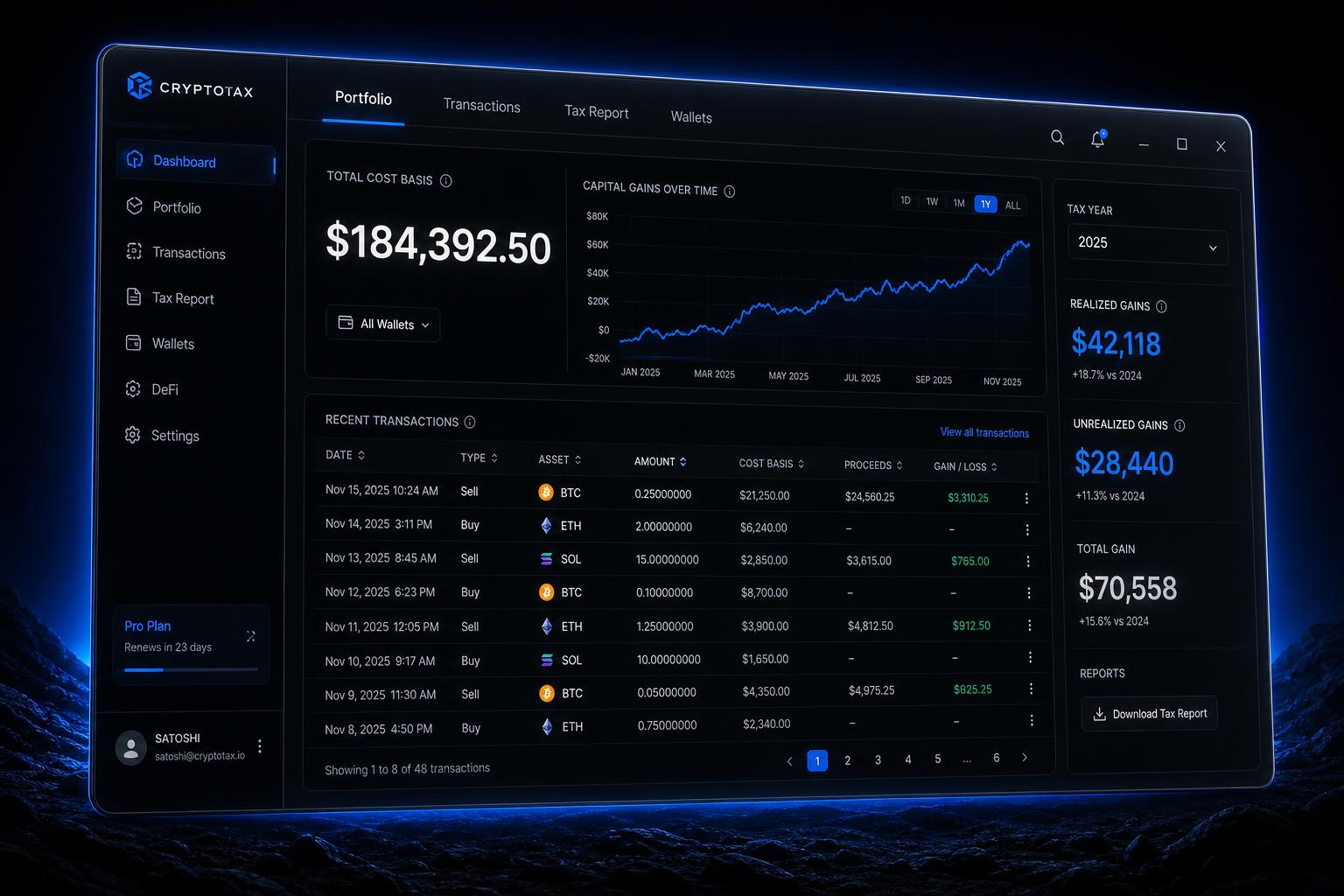
Crypto Tax Calculator dashboard preview
crypto-tax-calculator
portfolio · ytd
$284,917.42
recent · reconciledreviewed
§ 02 — why this matters

One exchange shows part of the story. One wallet shows another.
Your tax return needs all of it — and you only get to file it once.

§ 03 — surface

Every wallet.
Every chain.
Every move.

We follow each coin across the places it actually went — exchanges, wallets, bridges, wraps, LPs, airdrops, and the chains you barely remember using.

see what we connect
§ 04 — live · reconciliation
running
Live demo

Watch reconciliation happen.

Connect
Reconcile
Report
Coinbase
waiting…
Binance
waiting…
MetaMask
waiting…
Phantom
waiting…
Ledger
waiting…
Reconciling on-chain activity 0%
Total reconciled
$0
Transactions
0
Status
Idle
§ 05 — the workflow

Four
simple
steps.

No upsells in the way. Connect your accounts, review what we found, file when you're ready.

I Connect
Add your wallets and exchanges, including the ones your 1099 won't include. Read-only API keys or public addresses — we never ask for a seed phrase.
II Reconcile
We rebuild your history from on-chain data and exchange exports, and check it against what each platform reported.
III Resolve
We flag the things that actually change your tax — missing transfers, broken cost basis, wallets we don't recognise — and walk you through each one.
IV File
Export your report and the tax forms. Hand it to your accountant, or import straight into TurboTax or H&R Block.
§ 06 — the app

One view of every transaction.

Missing wallets, mismatched exchange data and broken cost basis are surfaced as warnings — not buried in a spreadsheet.

— so when you export, you know where every number came from.
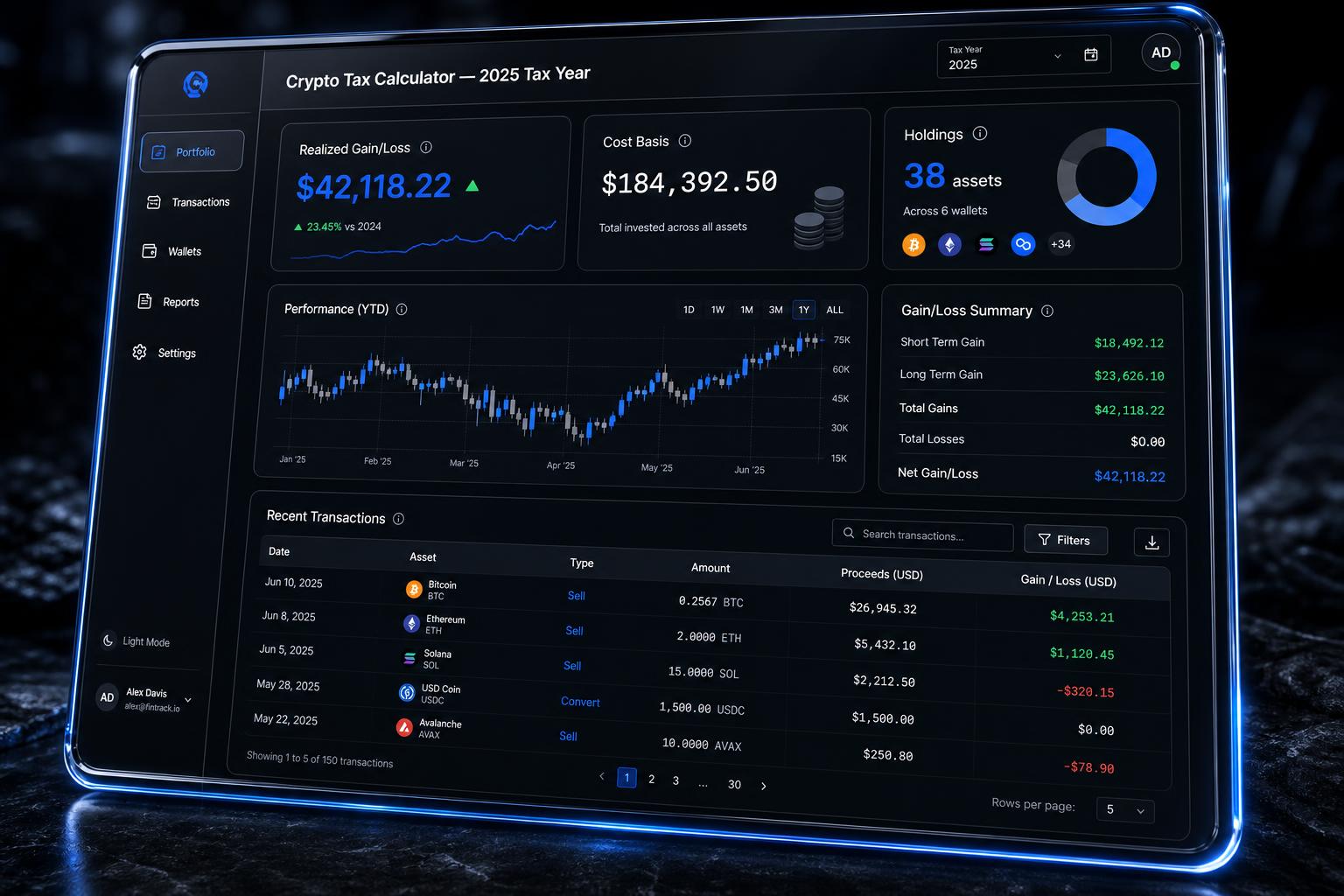
See the product
Dashboard preview
§ 07 — what's inside

What the
app does.

Check your 1099-DA

Compare what your exchange reported with what actually happened on-chain. Spot the gaps before the IRS does.

Catch the wallets you forgot about.

Cost basis that adds up.

200+ sources

exchanges, wallets, DeFi, chains

Traceable

every figure links to its source

§ 08 — what's covered
200+.
Integrations
exchanges, wallets and chains
20+.
Countries
local tax rules and forms
Multiple.
Cost-basis methods
FIFO, LIFO, HIFO, ACB and more
§ 09 — before you file

The gaps
most people
miss.

These are the things that change a tax number from "close enough" to "actually wrong." Check them before you submit.

01 Transfers between your own wallets
Moving BTC from an exchange to a hardware wallet is not a sale — but if it looks like one in your CSV, you can accidentally report a gain.
02 Airdrops and hard forks
Tokens that show up for free still have a cost basis and a receipt date. Missing them means your income and future gains are both off.
03 Staking, liquidity and yield rewards
Rewards are usually income when received, then capital gains when sold. Skip the first part and your income number is understated.
04 Wrapped tokens and bridges
Wrapping ETH into wETH or bridging across chains can look like a disposal in raw data. They need to be matched, not double-taxed.
05 Last year's cost basis
If last year's ending basis does not match this year's starting basis, every later gain/loss is wrong. We carry it forward automatically.
§ 10 — ready to file

See what's missing
before you file.

Free to import and review. You only pay when you're ready to download your final report. Works on macOS, Windows and Linux.